Vasa Museum Stockholm: Sweden's Most Visited Museum Drew 1.36 Million People to One Sunken Warship
On August 10 1628 the warship Vasa left Stockholm on her maiden voyage, heeled over in a gust and sank about 1,300 metres from where she started. She was the pride of the Swedish navy for about twenty minutes. Three centuries later that disaster is Sweden's most visited museum.
The Vasa Museum counted 1,359,250 visits in 2025, a little up on 1,353,503 the year before, according to preliminary figures from Sweden's museum association. The building opened in 1990 and was designed for about 700,000 a year. It now takes nearly twice that.
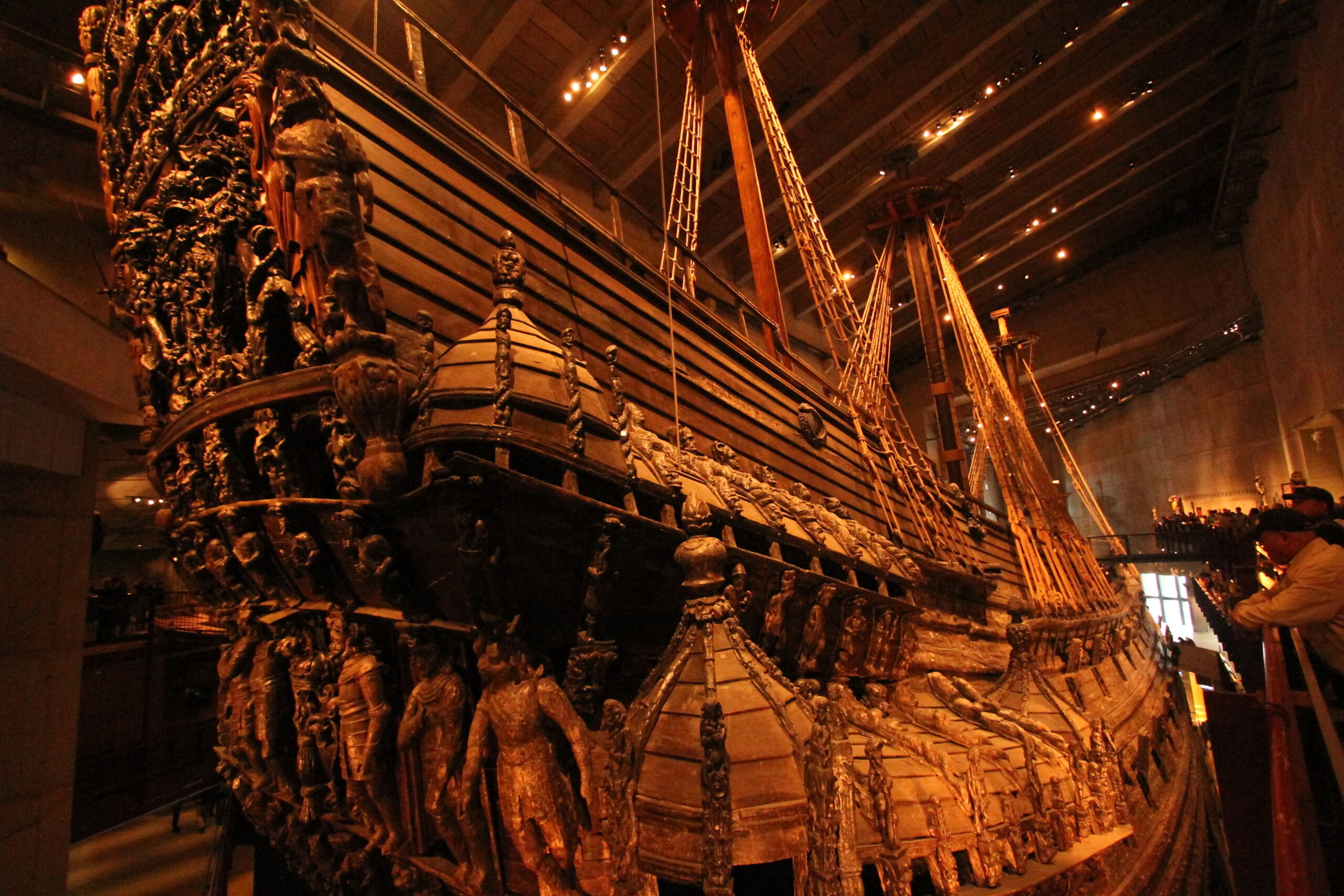
The light inside is kept low and warm to protect the wood, which gives you this. The ship rises through several floors of the hall, masts nearly touching the roof, every surface carved with lions, emperors and sea creatures. More than 98% of what you're looking at is original. She broke the surface on April 24 1961 after 333 years in the cold, brackish water of the harbour, where the shipworm that eats timber elsewhere couldn't survive.
Keeping her standing
The ship is fragile and her hull slowly shifts under its own weight. Since April 2024 the museum has been building a new internal steel support structure. It's due to be finished by 2028, the 400th anniversary of the sinking.
Tickets and timing
Adults pay 240 SEK from May to September and 195 SEK the rest of the year. Under-18s get in free. Buy online in summer to skip the ticket line.
The museum is on Djurgården, the island of museums, next to Skansen and the ABBA museum. Ferries run across from Slussen and Nybroplan, and the walk from the centre takes about twenty-five minutes along the water.
The crowd peaks late morning in summer, when tour groups arrive together. Come at opening or in the last hour and you can stand at the stern rail on the upper level with room to think about the men who were aboard. The museum tells their story too, with skeletons and the faces reconstructed from them. It's the part that stays with you.